Scale AI and HPC faster with AMD + Cornelis
Design, validate and deploy AMD EPYC™ and AMD Instinct™ systems with Cornelis networking, through the OEMs and system integrators you already use.

Design, validate and deploy AMD EPYC™ and AMD Instinct™ systems with Cornelis networking, through the OEMs and system integrators you already use.
Our collaboration with AMD helps HPC and AI for science customers design, validate and deploy systems that pair AMD EPYC™ CPUs and AMD Instinct™ GPUs with Cornelis® networking. Customers get more choice in compute, systems validated on their own applications, and a direct path to buy and deploy through the OEMs and system integrators they already use.

Cornelis CN5000 is qualified and in production on AMD EPYC™ 9005 Series platforms, validated on more than 25 platform configurations, and deployed at university, research, government and industrial sites across North America and Europe. Cornelis has also extended CN5000 qualification to AMD Instinct™ MI350X Series GPUs.

Our solutions target scientific and engineering workloads where compute and networking must scale together: computational fluid dynamics, climate and weather, life sciences, physics, materials science and other FP64-intensive codes.

AMD and Cornelis are working together to expand customer choice through open, interoperable AI and HPC solutions. Our collaboration gives organizations greater flexibility to select the compute and networking technologies that best meet their performance, scalability, and infrastructure needs.
AMD EPYC™ processors with Cornelis CN5000 have demonstrated strong performance and scaling across scientific and engineering applications including Ansys Fluent, OpenFOAM, Siemens Simcenter STAR-CCM+, CONVERGE CFD and WRF.
115%
average parallel efficiency at 8 nodes across four Fluent models, peaking at 129%, on dual AMD EPYC™ 9755 servers with CN5000.
112%
geometric-mean parallel efficiency at 8 nodes across nine STAR-CCM+ models, an 8.99× speedup, on dual AMD EPYC™ 9755 servers with CN5000.
~90%
scaling efficiency at 2 nodes, and about 70% at 4, across 132 workloads in 12 industry verticals on Dell R7725 servers with dual AMD EPYC™ 9755 and CN5000.

"AMD EPYC processors and the Cornelis fabric give us the compute density, low latency and consistent performance to serve them well, so our users can focus on their research."
AMD and Cornelis technical teams work together on your deployment, from architecture guidance through production operations.
Solutions ship through OEM platforms. Joint technical engagement covers:
Architecture guidance and pre-deployment planning
Workload testing in Munich
Escalation support during and after deployment

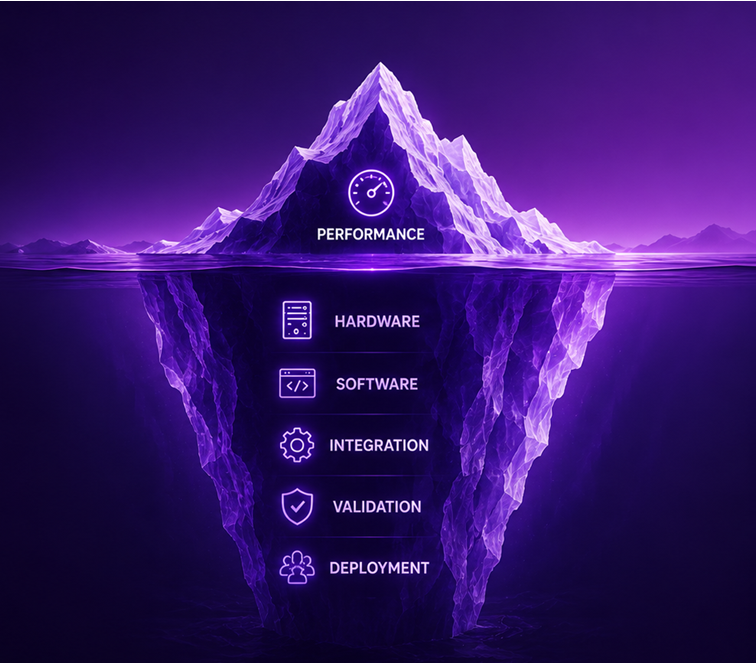
What OEM validation adds on top of a benchmark sheet, and why it matters before a fabric reaches your data centre.
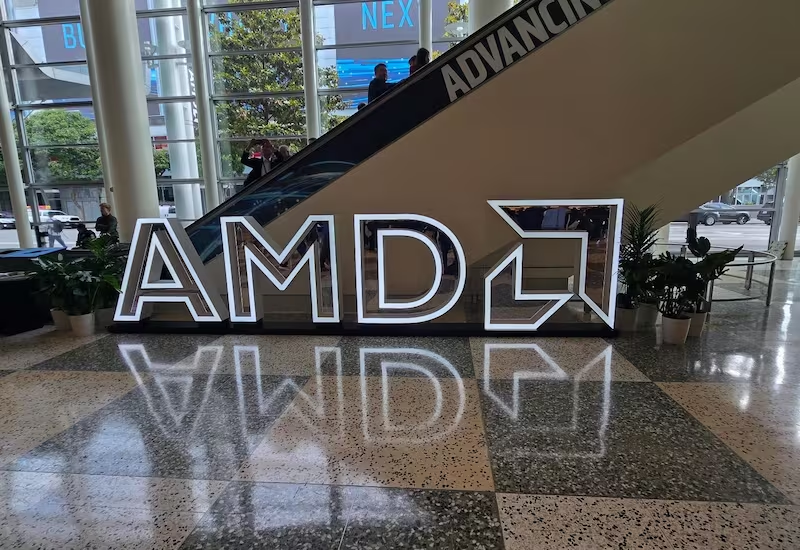
This week our team joined AMD in San Francisco for Advancing AI 2026.